Why a CCTV Design Tool Is Essential for Modern Security Planning
After years of installing security systems in everything from small retail shops to multi-building industrial sites, I have learned one thing the hard way: guessing never ends well. You might get lucky with a couple of cameras aimed at the obvious entry points, but the moment a client asks for coverage of a narrow corridor or a dimly lit loading dock, you realize how much depends on careful planning. That is where a proper CCTV design tool changes everything.
In the past, I used to sketch layouts by hand on graph paper, then try to calculate storage needs on a calculator. It worked, but it was slow and mistakes were easy to make. These days, a purpose-built cctvdesigntool like CCTVplanner takes the guesswork out of the process. It lets you place cameras virtually, see the field of view in real time, and adjust lens selection before you even climb a ladder. The difference in accuracy and confidence is huge.
From Site Survey to System Layout
A good security system starts with a thorough site survey. You walk the property, note potential blind spots, measure distances, and think about lighting conditions. But translating those observations into a reliable system layout is where many projects go wrong. A CCTV design tool helps bridge that gap. You input the dimensions of a room or outdoor area, choose the camera type, and immediately see how the field of view changes. This is especially valuable when you are deciding between an IP camera and an analog camera, because their sensor sizes and resolutions affect coverage differently.
For example, I once worked on a warehouse that needed coverage of a long aisle with high shelves. Using the tool, I could test different lens focal lengths without ordering equipment. The software showed me that a 2.8mm lens gave too wide a view with low detail at the far end, while a 6mm lens narrowed the field too much. The answer was a compromise: a 4mm lens with a 5MP IP camera that balanced field of view and resolution. That kind of precision is hard to achieve with guesswork.
Camera Placement and Field of View
Camera placement is more than just pointing a lens at a door. You need to consider height, angle, obstructions, and the required identification distance. A cctvdesigntool lets you model these variables. You can place a virtual camera on a map or floor plan and see exactly what it will capture. This is particularly useful for outdoor areas where you have to work around trees, signs, or building corners.
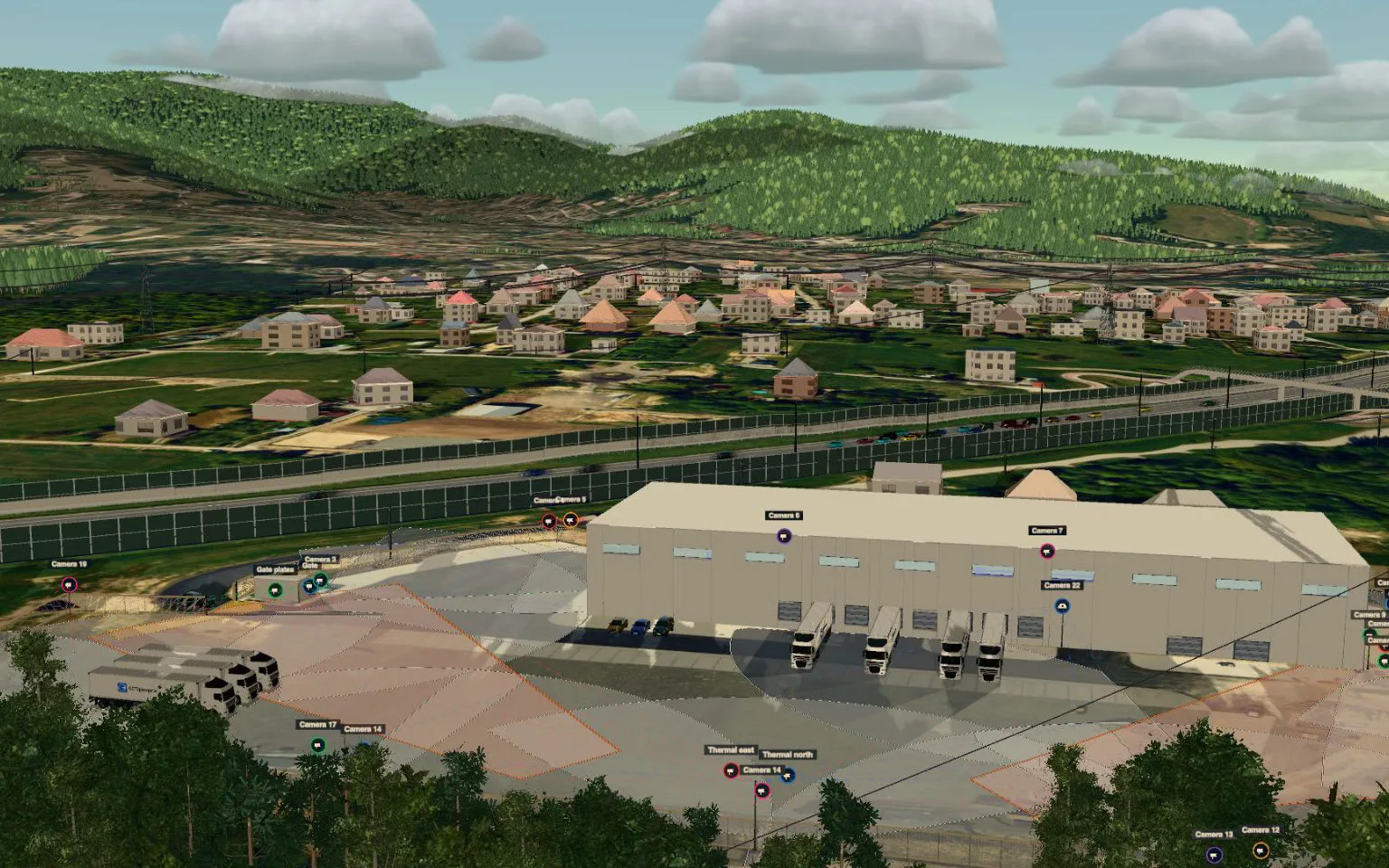
I recall a job at a parking lot where the client wanted to cover every vehicle entry point. Using the tool, I simulated different positions and found that one camera mounted on a light pole could cover two lanes instead of needing two separate cameras. That saved the client money on hardware and installation labor. It also reduced the number of cable runs, which simplified the power over Ethernet setup. The tool made that optimization obvious before any cable was pulled.
Lens Selection and Resolution Trade-Offs
Choosing the right lens is a balancing act. A wide-angle lens covers more area but loses detail at a distance. A telephoto lens gives you crisp close-ups but misses the big picture. The best choice depends on what the camera needs to see. A CCTV design tool helps you compare options side by side. You can change the lens in the software and see how the coverage area and pixel density shift.
Resolution also matters. Higher resolution means more detail, but it also means more storage and bandwidth. With H.265 compression, you can store more footage without sacrificing quality, but you still need to plan for it. The tool calculates storage requirements based on resolution, frame rate, and retention period. This is where a storage calculation feature becomes invaluable. You can show the client exactly how much hard drive space they need and why a 4K camera might be overkill for a low-traffic hallway.
Power and Connectivity Planning
Modern security systems rely heavily on power over Ethernet (PoE). It simplifies installation because you only run one cable for both data and power. But you still need to account for cable length. Ethernet has a maximum run of 100 meters before you need a switch or extender. A CCTV design tool can help you map out cable paths and check distances. I once had a project where the tool flagged a cable run that was 110 meters long. Without the tool, I would have discovered the problem on site and had to rework the plan. Instead, I moved the switch and saved a day of labor.
For systems using NVRs or DVRs, the tool also helps you match the recorder to the number of cameras and their bandwidth. An NVR that handles eight cameras might struggle if all of them are recording at high resolution and frame rate. The tool can estimate the total bandwidth and recommend a suitable recorder. This avoids the common mistake of undersizing the recording hardware.
Night Vision and Low-Light Performance
Security threats do not wait for daylight. Night vision capability is a critical part of any security system layout. When you design a system, you have to think about how far the infrared LEDs will reach and whether the camera's sensor is sensitive enough. A CCTV design tool often includes parameters for low-light performance. You can test different cameras in a virtual dark environment and see how the image quality holds up.

On one project, I needed to cover a dark alley behind a restaurant. The client wanted to use standard bullet cameras, but the tool showed that the IR range was insufficient for the distance. I switched to a camera with a larger sensor and better IR illumination. The change cost a bit more, but it meant the footage was usable at night. That is the kind of insight you get when you model the system before you buy anything.
Motion Detection and Video Analytics
Recording everything all the time wastes storage and makes review difficult. Motion detection helps, but setting it up correctly requires careful planning. You need to avoid false triggers from trees, shadows, or animals. A cctvdesigntool can help you define motion zones and sensitivity levels. Some tools even simulate how a moving object will trigger detection based on the camera's position and angle.
Video analytics go a step further by identifying specific events like loitering, line crossing, or object removal. These features depend on camera placement and angle. A camera mounted too high might not capture enough detail for facial recognition. A camera pointed directly at a bright window will wash out the image. The tool lets you test these scenarios and adjust the layout to get the best results from analytics.
Client Proposals and Professional Output
One of the most practical benefits of using a CCTV design tool is the ability to generate a professional client proposal. Instead of handing over a hand-drawn sketch, you can produce a clear, annotated layout with camera positions, coverage areas, and equipment lists. This builds trust and helps the client understand what they are paying for. It also makes it easier to get approval because the proposal is concrete.
When I present a proposal that includes a storage calculation table and a bandwidth estimate, clients appreciate the transparency. They see exactly how much storage they need for 30 days of footage and why a particular camera was chosen for a specific location. The tool also helps you generate technical exports for installers, which reduces errors during the physical installation.
Why a Dedicated Tool Beats Spreadsheets
Some people try to plan CCTV systems using spreadsheets or generic drawing software. It works for simple setups, but it quickly falls apart when you have multiple camera types, varying resolutions, and complex outdoor environments. A dedicated cctvdesigntool like CCTVplanner is built for this specific job. It understands camera parameters, calculates fields of view, and integrates storage and bandwidth planning into one workflow. The time savings alone justify using it, especially for larger projects.

In my own work, I have found that using a design tool reduces the number of change orders during installation. When you have a clear plan that has been tested virtually, the installation crew knows exactly where to mount each camera and what cable length they need. That means fewer trips back to the supply house and fewer unhappy clients.
Final Thoughts
Security system design is not rocket science, but it does require attention to detail. A CCTV design tool helps you get those details right without wasting time or money. Whether you are planning a single camera for a home office or a hundred cameras for a corporate campus, the principles are the same: know your field of view, choose the right lens, plan your power and cabling, and calculate your storage. A tool that handles all of that in one place is not a luxury. It is a practical necessity for anyone who takes security system layout seriously.